“This is true religion, to approve what God approves, to hate what He hates, and to delight in what delights Him.”
Charles Hodge
Sin is not only disobedience. It is personal. Every act of sin registers with God as an offense, something done against Him, not merely a rule broken in the abstract. That distinction matters, because offenses require a different kind of response than violations do. You can fix a violation with a fine or a correction. An offense requires the relationship itself to be addressed. This lesson looks at what happens when the debt owed after sin is treated as something religion can settle, and why only a restored relationship can actually make it right.
When someone wrongs us, we feel it in the relationship before we can even articulate what happened. Something shifts. Distance opens up. Scripture treats sin against God the same way. It is not simply a rule infraction recorded somewhere and forgotten. It is an offense against a person, and persons who are wronged look for something more than an explanation.
Job pictures what an honest response to that offense looks like.
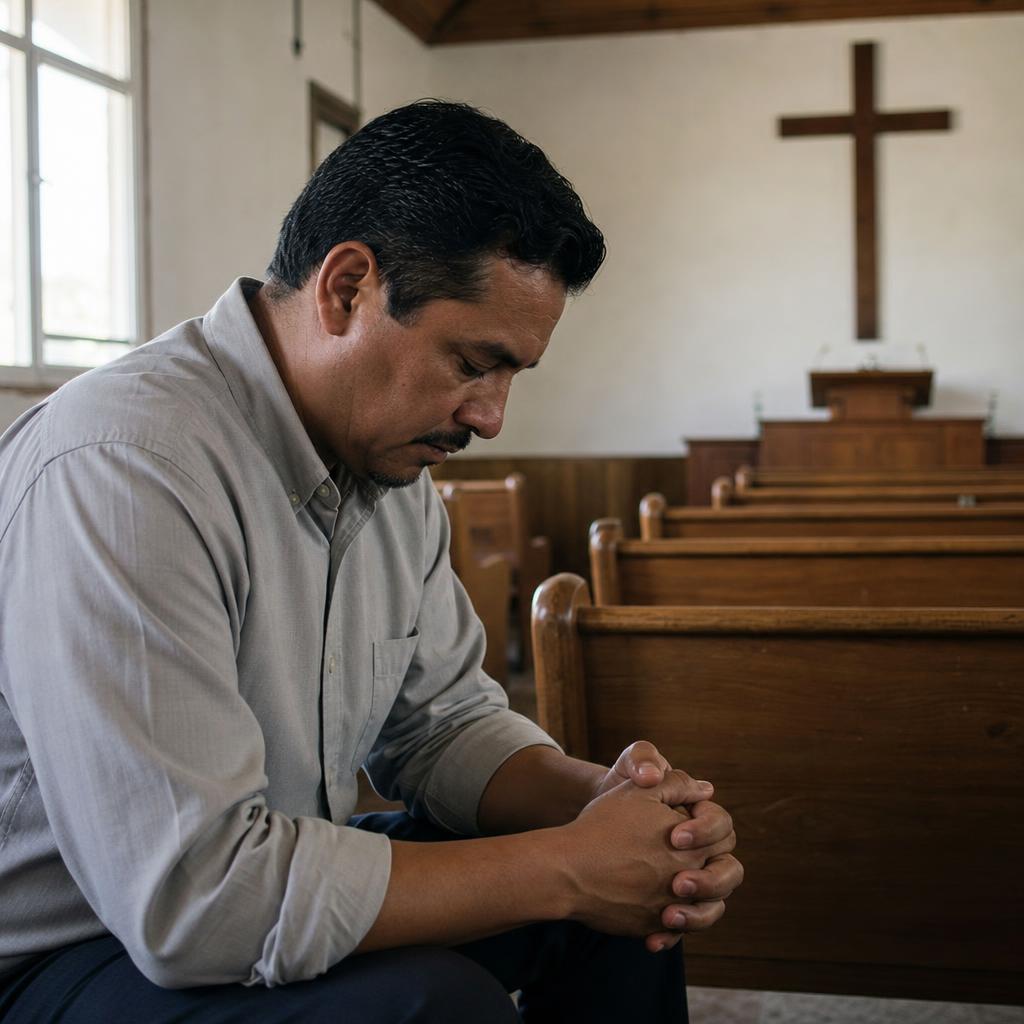
Job 34:31-32
“Suppose someone says to God, ‘I am guilty but will offend no more. Teach me what I cannot see; if I have done wrong, I will not do so again.’”
That posture, admitting fault and asking to see clearly, is where every real repair has to begin. But admission by itself only settles the account on one side. It says something true about the offender. It says nothing yet about whether the person offended has actually released the debt. That gap, between confessing a wrong and being forgiven for it, is where a lot of religious effort quietly gets stuck. A person can repeat Job’s posture faithfully, year after year, and still walk around unsure whether they’ve actually been forgiven, because confession was never the same transaction as forgiveness. One is something the offender offers. The other is something only the offended party can grant.
Paul draws a sharp line between two kinds of sorrow, and the difference determines whether confession ever reaches that second step.

2 Corinthians 7:10
“Godly sorrow brings repentance that leads to salvation and leaves no regret, but worldly sorrow brings death.”
Worldly sorrow grieves over getting caught. It regrets consequences, not the offense itself. It can produce an apology, sometimes a convincing one, but nothing underneath it changes, so the same offense tends to repeat. Godly sorrow grieves over the wrong itself, over what was done to the other person, and that grief produces a change durable enough to prevent the offense from happening again.
It’s worth noting these two are not always separate from the start. Plenty of people begin in worldly sorrow, sorry only that they were caught, and over time that sorrow deepens into something genuine as they actually reckon with who was hurt and how. The danger is not starting in the wrong place. The danger is staying there, mistaking the fear of consequences for the real thing and never letting it develop into grief over the offense itself.
Religion, at its best, can produce worldly sorrow. It can train people to feel bad, to follow a ritual of confession, to perform contrition on schedule. What it cannot do is reach the heart deeply enough to produce the sorrow that heals, because religion was never designed to restore a relationship. It was designed to manage behavior. And even where it does produce a measure of real grief, it still cannot supply what comes next. Forgiveness belongs to the offended party. No system, no set of practices, no amount of good behavior afterward can extract forgiveness from someone who was hurt. Only the person who was wronged can offer it. This is exactly the gap Job’s honest confession runs into. Since God is the one offended by sin, only God can grant the forgiveness sin requires, and Paul tells us plainly what God has already done about it.
God has reconciled us to Himself through Christ, and He has entrusted believers with the same message of reconciliation, no longer counting people’s sins against them (2 Corinthians 5:18-19). That reconciliation did not come from anything religious performance could produce. It came from God moving toward the offense Himself, absorbing it in Christ, and offering restoration as a gift rather than a transaction.
This changes how we handle every offense in our own lives, whether against God or against another person. Slapping a religious fix on top of a wound, an apology offered because it is expected, a donation made to ease the conscience, a set of new rules adopted to prove sincerity, does nothing for the relationship itself. What restores a relationship is the same thing that restored ours to God: honest grief over the wrong, sorrow that actually changes something, and forgiveness received rather than earned. Rules can regulate behavior. Only a relationship can restore what was broken.
Conclusion
Religion can produce guilt, ritual, and even a kind of regret. It cannot produce the sorrow that leads to real change, and it has no power to grant forgiveness that isn’t its to give. What sin breaks is relational, so what repairs it has to be relational too. God did not send a set of rules to fix what happened in the garden. He sent His Son to reconcile us to Himself, and that reconciliation is available to anyone willing to bring genuine sorrow instead of religious performance.

Moment Of Meditation
Is there an area of your life where your sorrow over sin has been closer to worldly regret than godly grief?